Ohhhh! Bears miss you guys so much!!!! At the beginning of the Year of Rooster, we wish you all the best! So, we will talk about something blessing - bat designs in Chinese art objects and what auspicious message behind the designs. This entry is written by my friend over the bear village, in exchange of few fishes, thanks for his kind effort!
Message Behind the Bat Designs (Part I)
In many Chinese art objects, such
as ceramics, jade, gold paintings, textiles and etc., auspicious bat imagery
can be found in the objects. It is common to use symbols in art in many
cultures, which makes the art objects unique. It is worth noting that the
Chinese language serves as the backbone of Chinese symbolism. There are
an abundant number of homophones in spoken Chinese, symbols derive meanings by
pictorial puns or rebuses.
Bats are the most popular among of
all pictorial puns, because the phonetic similarity with the character for “blessings”
(福, fu). In Ming dynasty, bats had an unprecedented visibility in a
wide range of materials.


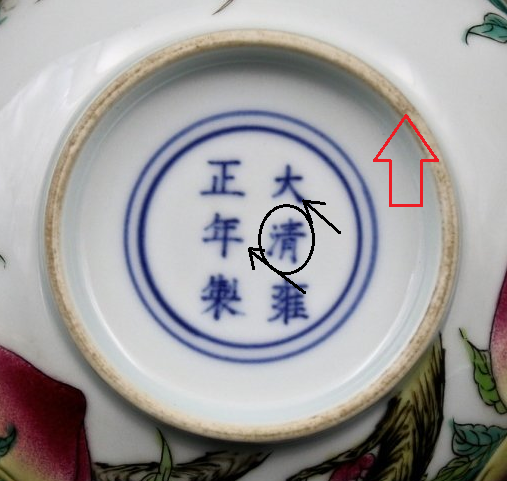
The above Qing dynasty porcelain
dish, from the Yongzheng period (1723-35), decorated with a total of eight
peaches (five on the front and three on the back) growing flowering branches and
five bats (three on the front and two on the back). This composition of
bat and peach became conventional during Yongzheng’s time.
Bats as a pictorial pun for
blessing while peaches are customarily associated with immortality. It is
said that Xiwangmu (西皇母), the Daorist goddess of longevity, grows peaches of
immortality in her garden. Peach trees need 3000 years to blossom and
take another 3000 years to bear the fruit that will bestow immortality on
whomever consumes it. In general, it is used to wish people with vast blessings, just like the blessings are filled in whole sky
Look at the dish again, we can see
the expansion of colours from the original overglaze enamels with its much
greater variations in tone. It captures the brush of fuzz and spots on
the skin of mature peaches. Besides, the branch extends from back over to
the front of the dish is a design known as guozhi (過枝) or “crossing over the rim” that suggests the sound of changzhi
(長治), meaning a long and peaceful reign, which is a compliment to the
emperor and wish him has a long reign. The red bats fly between two sides
along the peach branch, forming a balanced and animated scene that charm the
emperor for some time.
*sniff* *sniff*
We smell something fresh, sweet, juicy..... is it peach? Sorry, it is time to enjoy delicious peach! Although it is not grown by Xiwangmu and we won't have immortal life after eating the peach, it is a healthy food for our life!
Next time, we will keep talking about bat designs. Bye~~~~~
*sniff* *sniff*
We smell something fresh, sweet, juicy..... is it peach? Sorry, it is time to enjoy delicious peach! Although it is not grown by Xiwangmu and we won't have immortal life after eating the peach, it is a healthy food for our life!
Next time, we will keep talking about bat designs. Bye~~~~~